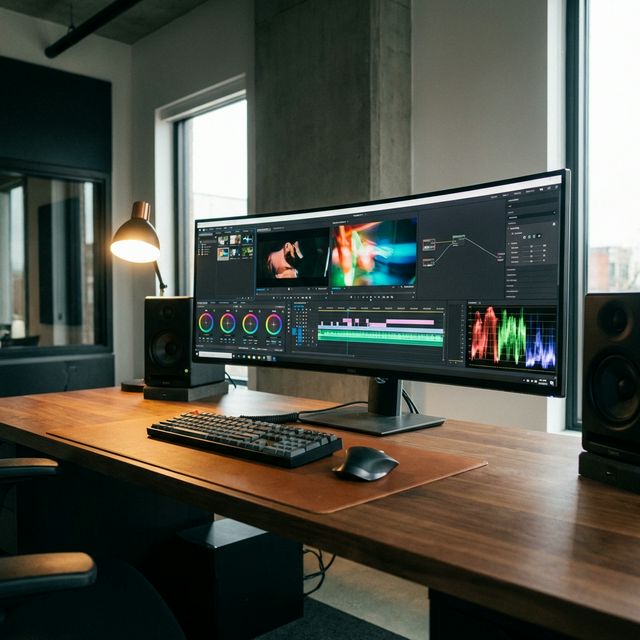
RGB has a bad reputation. We associate it with "Gamer™" aesthetics—rainbow waves, aggressive angles, and sensory overload.
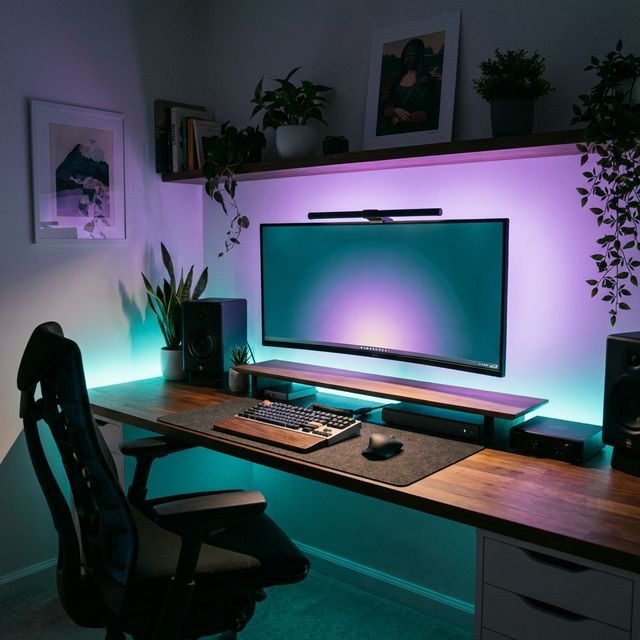
But lighting is the single easiest way to change the vibe of a room. Done right, RGB is mood lighting. It can make a small room feel cozy, or a dark room feel energetic.
Here is how to do it tastefully.
The Golden Rule: Direct vs. Indirect
- Direct RGB (Bad): Looking directly at an LED strip. It hurts your eyes and looks cheap.
- Indirect RGB (Good): Light bouncing off a wall or desk. It creates a soft glow.
The 3 Layers of Office Lighting
1. Monitor Bias Lighting (Functional)
This goes on the back of your monitor. It should be white (6500K) during the day to reduce eye strain, and warm orange (2700K) at night. Gear: Govee DreamView G1 or just a simple LED strip.
2. The "Horizon" Line (Aesthetic)
An LED strip along the back edge of your desk. This separates your desk from the wall visually. Gear: Any Govee or Philips Hue strip. Rule: Set it to a single, static color. Teal, Orange, or Purple work best. No rainbow waves.
3. Feature Lighting (Personality)
A lamp on a shelf, or a Nanoleaf panel. This is where you show off. Gear:
- Govee Glide Hexa: Soft, diffused panels.
- Philips Hue Go: Portable bowl of light.
Ecosystems: Govee vs. Philips Hue
Final Verdict
Start with a simple LED strip behind your desk ($20). Set it to a warm orange at night. It instantly makes the room feel warmer and more inviting. You don't need to spend $500 on Nanoleafs to get the effect.
What we like
- Instant vibe change
- Reduces eye strain (bias lighting)
- Looks great on video calls (background)
What could be better
- Cable management is annoying
- Can be distracting if too bright